livesforliteracy
-
A Brilliant (Indigenous) Author to Read: Alicia Elliott
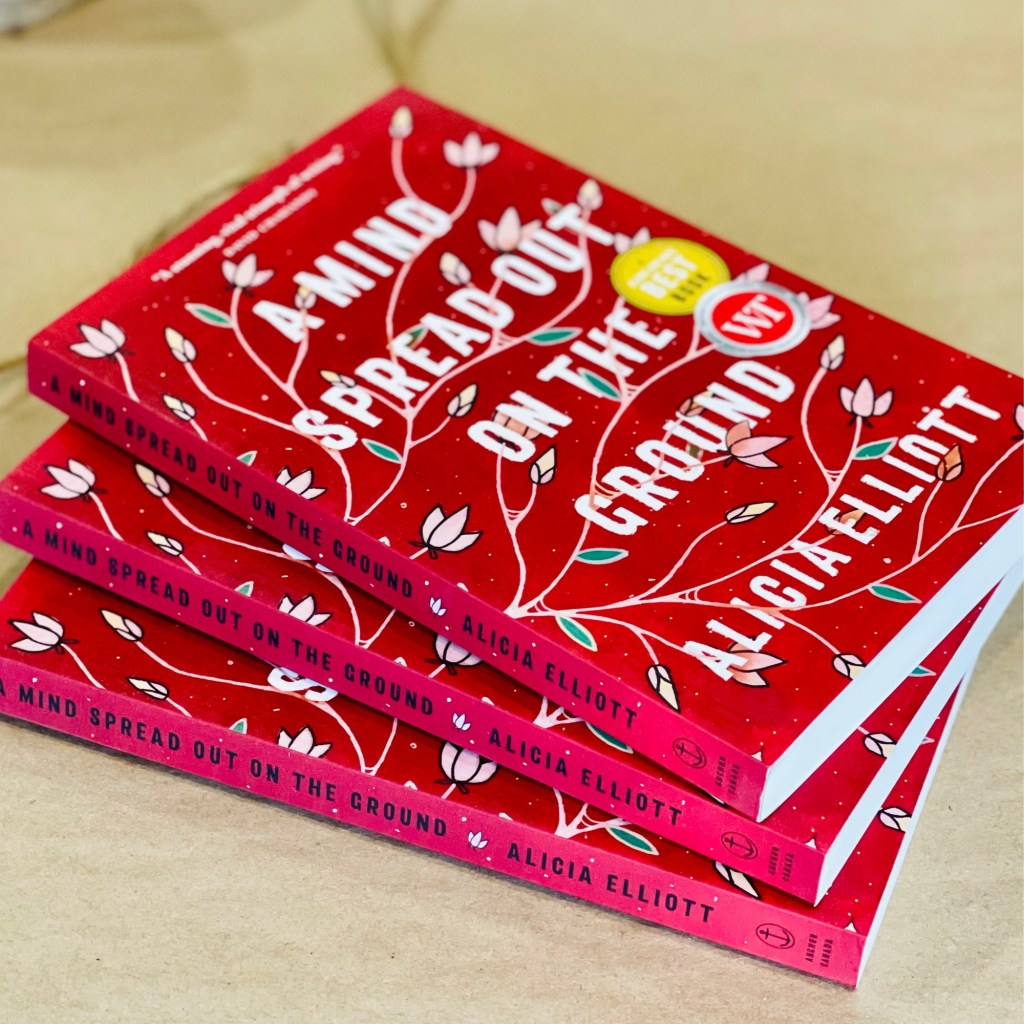
“The book I’m talking about is Alicia Elliott’s A Mind Spread Out on The Ground, which combines the author’s personal experience with broader issues of politics, colonialism, and history. Elliott’s essays cover a wide range of topics: racism, poverty, sexual assault, abuse, mental health, headlice, photography, etc. And I love the way she handles these…
-
Land Acknowledgements: What’s the Point?

“When they’re done right, I think land acknowledgements are a bit like historical plaques. They force us to confront history – rather than brushing over it or tearing it down. For many, they are an opportunity to learn. Land acknowledgements are not only historical, either, but also emphasize the land’s relevance to Indigenous communities today.…
-
Zero Tax, Free University and Free Homes: Do Indigenous People Really Get These Perks?

“Indigenous peoples do not have an inherently easier time than non-Indigenous people in Canada. If they have Indian status and live on reserve (two conditions which many do not fill), they might be eligible for certain benefits. There are plenty of legal and historical reasons for this, but, no, it’s not perfectly fair. I don’t…
-
Why are education sectors in developing countries like Nepal lagging?

“The financial conditions of the families are limiting thousands of brilliant children from getting advanced education. Many children face language barriers; the curriculum taught to them isn’t in their mother tongue. This can be a problem particularly in the multi-lingual developing countries like Nepal where children from hundreds of ethnic and linguistic backgrounds have to…
-
Reconciliation at Your Work

“Educating children is important, but we mustn’t stop there. Reconciliation has a very important role to play in higher education – especially, I’d argue, in the professional sphere. Three professional disciplines involve a particular responsibility towards Indigenous lives: politics, medicine, and law.” By Sofia Watt Sjöström
-
Reconciling the School System

“How do we reconcile Education with Reconciliation? First, we must challenge our own Eurocentric, colonial, racist, etc. biases, at every step along the way. Today’s education system is not, in fact, value neutral. Historically, it was designed to allow for the domination of a particular discourse, whether explicitly, or subtly through what is emphasized and…
-
Getting Beyond Residential Schools: Reclaiming Education

“This has been happening for decades. Already in 1970, brave Indigenous parents occupied the Blue Quills residential school in Alberta, and successfully made it their own. And in the years that followed, several more residential schools were taken over across Saskatchewan. Sadly, we don’t always hear these stories. But it’s important to remember that Indigenous…
-
What is Reconciliation? And What Can I Do?

“I learnt about Reconciliation on a personal level when I participated in a Circle for Reconciliation. Almost exclusively volunteer-led, this organization brings six Indigenous and six non-Indigenous individuals together, during an hour each week, for ten weeks. Its goal, more than anything, is to create mutually respectful relationships – the small-scale manifestation of Reconciliation. To…
-
“Why Don’t They Just Get Over It?” – The Long-term Impact of Residential Schools

“The legacy of the residential schools extends well beyond survivors’ lives. For instance, Indigenous communities have disproportionately high rates of infant mortality, diabetes, suicide, and substance-induced deaths. Indigenous people are 58% more likely than non-Indigenous ones to be the victims of crimes. 1079 Indigenous women were killed from 1980 to 2012, and still, they continue…
-
Evil, in the name of ‘Education’: An Overview of the Residential Schools

“In total, about 150’000 children were subjected to an ‘education’ in the residential schools. The net effect was a loss of culture, language and identity that was often multigenerational. Many survivors could not, or did not want to teach their mother tongues to their own children. Some became almost permanently estranged from their families and…
 Lives For Literacy